


Entry of arabic lexical units into the french language

https://doi.org/10.51955/2312-1327_2023_2_135
Abstract
The aim of the present article is to study the stages of occurrence of arabisms in the French language in order to identify the movement of the French vocabulary`s layer of Arabic origin. In this article the definition of a borrowing is given, taking into consideration the fact that in linguistic literature the question on what a loan word is is still debatable. In the article significant phases in the history of arabisms in the French language are given, the actual problem of adaptation of Arabic vocabulary in the French language environment is addressed. For the first time the vocabulary of Arabic origin in the French language is considered and analysed in the comparative study of dictionaries of the three centuries, namely: M. Devic, “Dictionnaire étymologique des mots d’origine orientale” (XIX), A. Dauzat, “Nouveau dictionnaire étymologique et historique” (XX) and Dictionnaire Larousse français monolingue et bilingues en ligne (XXI). It allows to designate the period most accurately in the history of the French language when Arabic lexical units were borrowed most intensively.
About the Author
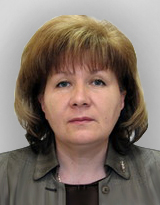
T. V. Slastnikova
Moscow City University
Russian Federation
Russian Federation
Tamara V. Slastnikova, PhD in Philology
Maliy Kazenniy per., 5b Moscow, 105064
References
1. Bertrand O. (2017). Ces mots venus d’ailleurs. Volume 1. Éditions Garnier, en partenariat avec Le Monde. Paris. 2017. 92 p.
2. Brunot F. (1965). La penseé et la langue. Paris: Masson et Cie, 1965. 982 p.
3. Cherkashina E. I. (2008). Iazyk dlia spetsial'nykh tselei: opyt prepodavaniia frantsuzskogo iazyka v sfere turizma [Language for special purposes: experience of teaching French in the field of tourism]. Vestnik MGPU. Seriia: Filologiia. Teoriia iazyka. Iazykovoe obrazovanie. 2(2): 68–71. EDN MIDDUD. (In Russian)
4. Cherkasova A. P. (2013). Arabic lexis in the maghrebian french, specifics of adaptation. Izvestiya Saratovskogo universiteta. Ser. Filologiya. Zhurnalistika. 13(2): 13–16. EDN VJDWQX. (In Russian)
5. Dauzat A., Dubois J., Mitterand H. (1964). Nouveau dictionnaire étymologique et historique. Paris: Larousse, 1964. XLIX, 804 p.
6. Deroy L. (1965). L'emprunt linquistique. Paris: Les belles Lettres, 1956. XII, 470 p.
7. Devic L. M. (1876). Dictionnaire étymologique des mots d'origine orientale (arabe, hébreu, persan, turc, malais). Paris: Imprimeri nationale. 1876. 283 p. (accessed: 04 April 2023).
8. Dialog kul'tur. Kul'tura dialoga: Chelovek i novye sotsiogumanitarnye tsennosti: kollektivnaia monografiia [Dialogue of cultures. Culture of dialogue Man and new socio-humanitarian values: A collective monograph] / Barishnikov N. V., Berditshevski A. L., Vikulova L. G. [et al.]. Moscow: NEOLITH Press. 2017. 424 p. ISBN 978-5-9909479-7-9. EDN ZRFIKJ. (In Russian)
9. Dictionnaire Larousse français monolingue et bilingues en ligne. Available at: https://www.larousse.fr/dictionnaires/francais (accessed 04 April 2023).
10. Giraud J., Pamart P., Riverain J. (1974). Les nouveaux «mots dans le vent». Paris: Larousse, 1974. 271 p.
11. Gogol D. V., Slastnikova T. V. (2018). Zaimstvovaniya v yazyke sovremennoi frantsuzkoi molodioji [Borrowings in the language of the modern French youth]. Iazyk, kul'tura, mental'nost': Germaniia i Frantsiia v evropeiskom iazykovom prostranstve: Materialy II Mezhdunarodnoi nauchnoprakticheskoi konferentsii, Nizhnii Novgorod, 04–05 oktiabria 2018 goda . Nizhnii Novgorod: NGLU Press. 39–42. EDN KXVGTI. (In Russian)
12. Gulyaeva E. V., Denisenko M. V., Nikitina I. S. (2021). Communicative Risks Related to Unjustified Use of Borrowings in Modern Media. Vestnik Volgogradskogo gosudarstvennogo universiteta. Seriya 2. Yazykoznanie [Science Journal of Volgograd State University. Linguistics]. 20(1): 146– 157. DOI 10.15688/jvolsu2.2021.1.12. EDN XXLBON. (In Russian)
13. Le bel avenir de la langue française. Available at: https://www.herodote.net/Le_bel_avenir_de_la_langue_francaise_3_3_-synthese-2090-450.php (accessed 04 April 2023).
14. Lunkova, L. N., Bukina, L. M. (2020). Semantic Anglicisms in French Internet Forum, RUDN Journal of Language Studies. Vestnik Rossiiskogo universiteta druzhby narodov. Seriia: Teoriia iazyka. Semiotika. Semantika [Semiotics and Semantics]. 11(1): 92–101. DOI 10.22363/2313-2299-2020-11-1-92-101. EDN FEDKKJ. (In Russian)
15. Mel’čuk I., Polguère A. (2007). Lexique actif du français ‒ l’apprentissage du vocabulaire fondé sur 20.000 dérivations sémantiques et collocations du français. De Boeck & Larcier, «Champs linguistiques», 2007. 528 p.
16. Nurmoldayev S., Orazaliyev B., Doszhan R. [et al.] (2020). Cognitive analysis of intercultural communication in linguistics. Xlinguae. 13(2): 189–196. DOI 10.18355/XL.2020.13.02.16
17. Polguère A. (2009). Lexical systems: graph models of natural language lexicons. Language Resources and Evaluation. 43(1): 41–55. DOI 10.1007/s10579-008-9078-4.
18. Romilly J. (2007). Dans le jardin des mots. Éditions de Fallois. 2007. 344 p. DOI 10.1007/s10579- 008-9078-4.
19. Shanski N. M., Bobrova T. A. (1972). Lexikologiya sovremennogo russkogo yazyka [Lexicology of modern Russian language]. Moscow: Prosvescheniye Press. 1972. 253 p. (In Russian)
20. SHCHepilova A. V. (2007). Didactics of multilingualism and the problem of the «dominant» language. Inostrannye iazyki v shkole. 6: 23–27. EDN JXAYMV. (In Russian)
21. Slastnikova T. V. (2017). Arabisms in modern french. Aktual’nye problemi sovremennogo yazykovogo obrazovaniya v vuze: Materialy konferentsii [Actual problems of modern language education in higher education: issues of language theory and teaching methods: VI International Scientific and Practical Conference, Kolomna, May 18-20, 2017. Kolomna. Moscow State Regional Socio-Humanitarian Institute]. Kolomna. 99–101. EDN XRFUAP. (In Russian)
22. Tareva E. G., Schepilova A. V., Tarev B. V. (2017). Intercultural content of a Foreign Language Textbooks: Concept, Texts, Practices. XLinguae. 10(3): 246–255.
23. Tsybova I. A. (2017). Arabisms in european languages. Lingvostranovedeniye: metodi analiza, tekhnologuiya obutcheniya [Linguistics: Methods of analysis, teaching technology, Moscow, June 15–16, 2016. Volume Part 2. Moscow: Moscow State Institute of International Relations (University) Ministry of Foreign Affairs of the Russian Federation]. 183‒191. (In Russian)
24. Vikulova L. G., Razumova L. V., Ukhova L. V. [et al.] (2021). The slang of young Russians and French: Reinventing scientific linguistic collaboration in the age of coronavirus and containment. XLinguae. 14(4): 237–253. DOI 10.18355/XL.2021.14.04.16. EDN LBRJSZ.
25. Vzaimodeistvie iazykov i kul'tur: ot dialoga k polilogu [Interaction of languages and cultures: from dialogue to polylogue] / L. G. Vikulova, E. G. Tareva Eds. Moscow, VKN Publishing house. 2021. 328 p. ISBN 978-5-907086-89-0. DOI 10.54449/9785907086890. EDN XKHWWC. (In Russian)
26. Younes J., Souissi E., Hadhémi A., Ferchichi A. (2020). Language resources for Maghrebi Arabic dialects’ NLP: a survey. Language Resources and Evaluation. 54: 1079–1142.
Review
For citations:
Slastnikova T.V. Entry of arabic lexical units into the french language. Crede Experto: transport, society, education, language. 2023;(2):135-148. (In Russ.) https://doi.org/10.51955/2312-1327_2023_2_135
Views:
266
JATS XML




 Email this article