


THE CONTENT OF LANGUAGE EDUCATION: FROM THE TRADITIONAL TO THE HUMANISTIC PARADIGM

https://doi.org/10.51955/2312-1327_2023_3_182
Abstract
The article reveals the understanding of the concept of paradigm in the context of the consideration of language education, describes the main paradigms of modern education (including language education): knowledge, competence, humanistic. Within each paradigm, the main changes in the content of language education are presented, taking into account the essence of a particular paradigm. The process of paradigm shift and the reasons for such changes are described. The polyparadigmatism of modern pedagogical science is proved. The factors influencing the necessity of coexistence of different paradigms of modern language education are revealed.
About the Author
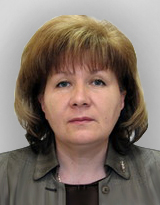
E. M. Kazantseva
Irkutsk State University
Russian Federation
Russian Federation
Elena M. Kazantseva, candidate of pedagogical Sciences, associate Professor
1, Karl Marx Street Irkutsk, 664003
References
1. Agapova N. G. (2008). Paradigmatic orientations and models of modern education (system analysis in the context of philosophy of culture) : monograph. Ryazan State University named after S.A. Yesenin. Rizan: 364 p. EDN QWWYEL. (in Russian)
2. Andreev A. L. (2007). Competence paradigm in education: experience of philosophical and methodological analysis. Available at: https://portalus.ru/modules/shkola/rus_readme.php?subaction=showfull&id=1193748437&archive=1194448667&start_from=&ucat=& (accessed 18 January 2023). (in Russian)
3. Askanova O. V., Kazantseva Yu. V. (2015). Knowledge and competence paradigms of education: what is capable of solving the modernization task? MNKO. 6(55): 199-201. EDN VKIETH. (in Russian)
4. Bederkhanova V. P. (2008). Technologies in the humanistic paradigm of education. School technologies. 6: 20-25. (in Russian)
5. Bim I. L., Sadomova L. V. (2014). Cultural space and the new content of education: reflections on the interaction of factors and mechanisms. Moscow. TSOT, 2014. 140 p. (in Russian)
6. Bolotov V. A., Serikov V. V. (2003). Competence model: from an idea to an educational program. Pedagogy. 10: 8-14. EDN SKCHXT. (in Russian)
7. Bondarevskaya E. V., Kulnevich S. V. (2007). Paradigmatic approach to the development of the content of key pedagogical competencies. Available at: https://portalus.ru/modules/shkola/rus_readme.php?subaction=showfull&id=1193319127&archive=1195596940&start_from=&ucat=& (accessed 17 October 2022). (in Russian)
8. Chetverikova O. N. (2015). Destruction of the future. Who and how destroys sovereign education in Russia. Moscow. 2015. 111 p. (in Russian)
9. Competence and problems of its formation in the system of continuing education (school – university – postgraduate education) / scientific ed. prof. I. A. Zimnaya; Materials of the scientific and methodological conference "Actual problems of quality of education and ways to solve them". Moscow: Research Center for Quality Problems of training specialists, 2006: 130 p. (in Russian)
10. Frumin I. D. (2002). What is responsible for? Competence-based approach as a natural stage of updating the content of education. Uchitelskaya gazeta. 36: 38-39. (in Russian)
11. Interaction of languages and cultures: from dialogue to polylogue : a collective monograph / editorin-chief L. G. Vikulova, E. G. Tareva. Moscow. VKN, 2021: 27. DOI: 10.54449/9785907086890. (in Russian)
12. Knyaginina N. V. (2020). What do we know about FGOS? Why educational standards are needed, how they were developed and studied (Part 1). Educational Policy. 4(84): 48-57. DOI 10.22394/2078-838X-2020-4-48-56. EDN WXNDNO. (in Russian)
13. Kraevsky V. V. (2006). Parade of paradigms (afterword to the article by N.L. Korshunova). Pedagogy. 8: 20-24. EDN NBYASX. (in Russian)
14. Krasnova L. A. (2014). The content of education: traditions and prospects of development. Domestic and foreign pedagogy. 4(19): 35-44. EDN SNJTQT. (in Russian)
15. Krayevsky V. V., Khutorskoy A. V. (2003). Subject and general subject in educational standards. Pedagogy. 2: 3-10. EDN SGUKXR. (in Russian)
16. Kuhn T. S. (2009). The structure of scientific revolutions. Moscow. AST, 2009. 312 p. (in Russian)
17. Lebedev O. E. (2004). Competence approach in education. School technologies. 5: 3-12. EDN SKEDIV. (in Russian)
18. Lerner I. Ya. (1981). Didactic foundations of teaching methods. Moscow: 1981. 186 p. (in Russian)
19. Levina E. Yu., Mukhametzyanova L. Yu. (2020). The development of a person of knowledge in the perspective of the cognitive paradigm. Kazan Pedagogical Journal. 3: 8-19. EDN NNNYBI. (in Russian)
20. Lyz N. A. (2005). A look at paradigms and changes in pedagogy. Pedagogy. 8: 16-26. EDN NCMDVD. (in Russian)
21. Matukhin D. L. (2012). The main directions of the development of higher professional education in the context of the ideas of a new educational paradigm. Bulletin of Tomsk State Pedagogical University. 5: 110-115. EDN PBKKIP. (in Russian)
22. Mirolyubov A. A. (2002). History of the Russian methodology of teaching foreign languages. Moscow. STEPS, INFRA-M. 2002. 447 p. (in Russian)
23. Nikitenko Z. N. (2015). The content of primary foreign language education: conceptual foundations. Teacher of the XXI century. 1. 150-155. EDN TMVIFJ. (in Russian)
24. Pedagogical dictionary. Moscow. 1960. 774 р. (in Russian)
25. Philosophical Encyclopedic Dictionary. 2nd ed. Moscow: Sov. encikl., 1989. 815 p. (in Russian)
26. Ragozina G. A., Konyakhina I. V. (2014). The meaning of the competence paradigm in education. Privolzhsky Scientific Bulletin. 2(30). 159-166. EDN RWFXTX. (in Russian)
27. Romanenko I. B. (2001). Ancient and medieval educational paradigms: the problem of transition. The Universe of Platonic thought: Neoplatonism and Christianity. The apology of Socrates. St. Petersburg: 42-50. (in Russian)
28. Romanenko I. B. (2003). Educational paradigms in the history of philosophy: autoref. dis. ... Dr. phi-losof. nauk. Moscow. 35 p. EDN VHJGXD. (in Russian)
29. Shatilov readings. Prospects for the development of the paradigm of foreign language education : monography. Saint-Petersburg : POLYTECH-PRESS. 2021. 541 p. DOI 10.18720/SPBPU/2/id21-146. EDN WIPLSK. (in Russian)
30. Tareva E. G. (2021). Language education in the era of postmodernism: a crisis of consistency or a new consistency? Language and culture. 53: 270-289. DOI 10.17223/19996195/53/17. EDN MGDIDQ. (in Russian)
31. Teterin V. V. (2013). Paradigm: from Socrates' Highest Idea to T. Kuhn's Disciplinary Matrix. Bulletin of IrSTU. 3(74): 222-226. EDN PYAKQT. (in Russian)
32. The New Philosophical Encyclopedia. In 4 vols. / edited by V.S. Stepin. Moscow: Mysl, 2001. Vol. 3. 694 p. (in Russian)
33. Yamburg E. A. (2004). Harmonization of pedagogical paradigms – development strategy. Problems of the introduction of psychological and pedagogical research in the education system : collection of scientific articles of the International Scientific and Practical Conference. Moscow: 92-96. (in Russian)
34. Yatsyk V. Z. Chernyshenko Yu. K., Piskareva O. V. (2008). Paradigms of modern education. Physical culture, sport – science and practice. 2. 47-51. EDN QJBUXZ. (in Russian)
Review
For citations:
Kazantseva E.M. THE CONTENT OF LANGUAGE EDUCATION: FROM THE TRADITIONAL TO THE HUMANISTIC PARADIGM. Crede Experto: transport, society, education, language. 2023;(3):182-197. (In Russ.) https://doi.org/10.51955/2312-1327_2023_3_182
Views:
260
JATS XML





 Email this article