


WAYS AND MEANS OF PRESERVING THE BURYAT LANGUAGE AMONG CHILDREN

https://doi.org/10.51955/2312-1327_2024_3_226
Abstract
The problem of preserving the native language still remains acute, especially among children. Childhood is a special period of human development, the child’s active acquisition of spoken language, the formation and development of all aspects of speech - phonetic, lexical, and grammatical. Our research shows that the number of preschool children who do not understand and do not speak their native Buryat language is increasing from year to year. A very specific situation has developed that requires analysis and special attention from authorities and educational structures and the general public. The author reflects on this and on the ways and means of preserving the native Buryat language in children's environment, shares his experience of conducting and the results of experimental activities on organizing a monolingual speech development environment in preschool educational organizations. The author describes the experience of organizing parent clubs to include parents in educational activities.
Keywords
Buryat language,
experiment,
subject spatial environment,
speech environment,
monolingual speech environment,
language images,
children's speech environment,
subordinate bilingualism,
sociolinguistic conditions,
interactive technologies,
parental community,
federal educational program of preschool education,
federal state educational standard of preschool education
About the Author
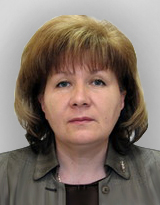
S. Ts. Sodnomov
AEI APE RB Buryat Republican Institute of Educational Policy; Center for Native Languages and Cultures of the Peoples of the Russian Federation RAO
Russian Federation
Russian Federation
Sonombal Ts. Sodnomov, Doctor of Pedagogical Sciences, Professor; chief expert
30, Sovetskaya Street Ulan-Ude, 670000
8, Pogodinskaya street
Moscow, 119121
References
1. Badmaeva S. B., Vanchizhuy D. D. (2021). Partial educational program for musical education of preschool children “Hongyoohon khonkhonuud”. Ulan-Ude, 2021. 40 p.
2. Bagirokov Kh. Z., Blyagoz Z. U. (2012). On the issue of the concepts of “native language” and “nonnative language”. Bulletin of the Adygea State University. Series 2: Philology and art history. 2: 130133. EDN PIBNTN.
3. Bazheeva T. P. (2002). Social and linguistic aspects of the formation of early (children’s) BuryatRussian and Russian-Buryat bilingualism. Ulan-Ude: Buryat Scientific Center of the Siberian Branch of the Russian Academy of Sciences, 2002. 152 p. EDN WZKCCN.
4. Buryat language in the regions of Russia, Mongolia and China: state, problems, factors and developments: monograph / rep. ed. D. D. Badaraev. Ulan-Ude: Buryat State University Publishing House, 2020. 256 p.
5. Dareeva O. A. (2021). Experience in implementing the State Program of the Russian Federation "Development of Education" on the example of teaching the Buryat language in preschool educational organizations in the Republic of Buryatia. Pedagogy. Questions of theory and practice. 6(1): 62-67. DOI 10.30853/ped210006. EDN HJYEIT.
6. Dorzhieva A. A., Anzanova B. D., Akhmadeeva G. G. [et al.]. (2021). Partial educational program for preschool education in visual arts “Uran Garkhan “Skillful Hands” for children from 3 to 7 years old. Ulan-Ude, 2021. 55 p.
7. Gabysheva F. V., Semenova S. S. (2023). The concept of teaching the Yakut language, literature and culture in the Republic of Sakha (Yakutia): from concept to implementation.
8. Yakutsk: Yakut Republican Printing House named after. Yu. A. Gagarina, 2023. 127 p.
9. Gusev A. V. (2022). Current issues of involving parents in teaching the languages of the peoples of the Russian Federation. Bulletin of Education of the Khabarovsk Territory. 3(11): pp.7-10. Hezhenge 2022.
10. Khuүgedey-turelkhidey hamtyn tusel “Sugtaa unshanabdi!” “Shony mehelhen shandagan” (2022). Available at: https://youtu.be/QgL9BhiYp0Q (accessed 27 December 2023).
11. On approval of the State Program of the Republic of Buryatia “Preservation and development of the Buryat language in the Republic of Buryatia for 2021-2030”: Decree of the Government of the Republic of Buryatia dated December 28, 2020 No. 816 Ulan-Ude (2023). Available at: https://docs.cntd.ru/document/571091607 (date of access:04.12 2023).
12. Shovgenin A. N. (2023). On the issue of distinguishing the concepts of “native language”, “first language”, “second language”, “non-native language” in sociolinguistic research. Russian Linguistic Bulletin. 8(44). DOI 10.18454/RULB.2023.44.19. EDN UABNFG.
13. Shpotova V. (2023). Ways to solve the problem of speech development of children in preschool education. Available at: https://xn--j1ahfl.xn--p1ai/librar (accessed 11 December 2023).
14. Sodnomov S. Ts. (2005). Baga nahanay huragshadai aman khelelge hүgzhoөөlge: һurgalgyn theory bolon practice [Development of oral speech of junior schoolchildren: theory and practice of teaching]. Ulaan-Ude: Buryaadai Gurenei University Heblel, 2005. 159 p.
15. Sodnomov S. Ts. (2020). Development of the native Buryat speech of preschool children as the basis for the formation of global competencies. Scientific and methodological journal Search. 5(73): pp. 21-24. EDN GETRWU.
16. Ulzytueva A. I. (2011). Cultural-dialogical development of preschoolers in conditions of bilingualism: monograph. Moscow: Flinta: Nauka, 2011. 157 p.
17. What a joy it is to be a father!!! (2018). Available at: https://youtu.be/ROC5ank690k (date of access: 27.12 2023).
Review
For citations:
Sodnomov S.Ts. WAYS AND MEANS OF PRESERVING THE BURYAT LANGUAGE AMONG CHILDREN. Crede Experto: transport, society, education, language. 2024;(3):226-238. (In Russ.) https://doi.org/10.51955/2312-1327_2024_3_226
Views:
249
JATS XML




 Email this article