


Active processes in the vocabulary of the German language in 2020–2021

https://doi.org/10.51955/2312-1327_2021_3_151
Abstract
The article discusses the active processes in the vocabulary of the modern German language in 2020–2021: the processes of borrowing, word formation and semantic derivation. The processes of borrowing and word formation from foreign language/borrowed elements are interpreted as exogenous processes that form a global identity, and are opposed to word-formation processes from autochthonous elements, defined as endogenous processes that contribute to the formation of national identity. Semantic derivation and hybrid word formation are understood as exogenous-endogenous processes of the formation of global and national identity. The article notes that modern borrowings in German are direct borrowings from the English language (7%), less often calques and half-calques, as well as replacing of German words with English words and pseudo-borrowings. It is shown that borrowing becomes the cause of a special lexical and phraseological synonymy in the German language. The creation of culturally-marked vocabulary, lexical polyonymy for expressing key concepts, metaphorization and contamination that implements a language game are described as features of modern word formation. Attention is drawn to the main groups of new phraseological units, as well as to the role of hybridization in word- and phrase formation. The processes of semantic derivation are described as the semantic development of vocabulary based on the concretization and specialization of the relationship
About the Author
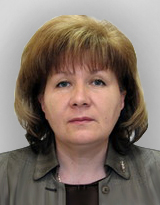
Lyubov A. Nefedova
Institute of Foreign Languages Moscow Pedagogical State University 1, Malaya Pirogovskaya street, Moscow, 119992
Russian Federation
Russian Federation
doctor of philology, professor, head of the department of German language
References
1. Barz, Irmhild. (2005). Fremdwortbildung // Duden. Band 4. Die Grammatik. 7. völlig neu erarbeitete und erweiterte Auflage. Mannheim, S. 690-695.
2. Digitales Wörterbuch der deutschen Sprache. URL: https://www.dwds.de/wb/Lockdown (accessed: 01.05.2021).
3. Eisenberg, Peter. (2012). Das Fremdwort im Deutschen. Berlin/New York: de Gruyter.
4. Espagne, M. (2018). History of civilizations as a cultural transfer. Moscow: New Literary Review, 816 p. [in Russian]
5. Fiedler, Sabine. (2014). Gläserne Decke und Elefant im Raum: Phraseologische Anglizismen im Deutschen. Berlin: Logos Verlag.
6. Karpova N. A., Kobenko Yu. V., Ryabova E. S. (2020). Segments of pseudo-borrowings in the modern German literary language: historical-sociolinguistic and system-functional aspects. Scientific journal "Modern linguistic and methodological-didactic research". No. 2: 18-34. [in Russian]
7. Knipf-Komlósi, Elisabeth/Roberta V. Rada und Bernáth, Csilla. (2006). Aspekte des deutschen Wortschatzes. Ausgewählte Fragen zu Wortschatz und Stil. Budapest: Bölcsész Konzorcium, 273 s.
8. Kornienko, O. Yu. (2019). Evolution of national identity in the context of globalization. News of the Ural Federal University. Ser. 3, Social Sciences. Vol. 14, No. 4 (194): 175–187. [in Russian]
9. Möhrs, Christine. Zwischen den Jahren oder eine Zeit zwischen den Zeiten. Sprachliche Betrachtungen zur "Normalität". URL: https://www1.ids-mannheim.de/fileadmin/aktuell/Coronakrise/IDS_Sprache_Coronakrise_Moehrs_Normalitaet.pdf (accessed: 01.05.2021).
10. Nefedova, L. A. (2003). The phenomenon of deviation in the vocabulary of the modern German language. Diss. ... doct. philol. sciences. Moscow, 365 p. [in Russian]
11. Nefedova, L. A. (2013). New in the lexical paradigms of the German and Russian languages as a result of the English-language influence. Philological sciences. Questions of theory and practice. No. 6 (24). Part 1: 149-153. [in Russian]
12. Nefedova, L.A. (2013). The Phenomenon Reverse to the Calculation of Anglicisms in the Lexicon of the Modern German Language. Science and School. No. 2: 67-70. [in Russian]
13. Nefedova, L. A., Polyakov, O. G. (2015). Borrowed stable phrases from the English language: direct borrowings or tracing papers? (based on the material of modern German and Russian languages). Philological sciences. Questions of theory and practice. No. 4-2 (46): 139-143. [in Russian]
14. Neologismenwörterbuch. Neuer Wortschatz rund um die Coronapandemie. URL: https://www.owid.de/docs/neo/listen/corona.jsp (accessed: 01.05.2021).
15. Pöllmann, Magdalena. Handy, Castingshow und Public Viewing. Pseudoanglizismen als Internationalismen. Ein Vergleich in vier Sprachen. Europäische Hochschulschriften, Band 379. – Frankfurt am Main: Peter Lang GmbH, Internationaler Verlag der Wissenschaften, 2012.
16. Sandakova, M. V. (2019). Methods of semantic derivation and types of relationships between meanings in the semantic structure of an adjective. Scientific dialogue. No. 3: 117-131. [in Russian]
17. Steffens, Doris. (2005). Neologismen im Deutschen = Angloamerikanismen? In: Partridge, John (Hrsg.): Getting into German. Multidisciplinary Linguistic Approaches (German Linguistic and Cultural Studies 17). Oxford, Bern, Berlin, Bruxelles, Frankfurt am Main, New York, Wien: Lang, S. 43–60.
18. Voloshina, S. V. (2016). Active processes in modern Russian language: textbook. Tomsk: Publishing House of Tomsk State University, 184 p. [in Russian]
19. Zhilyuk, S. A. (2015). The use of borrowings in the system of German word formation. Dis. ... cand. filol. sciences. St. Petersburg, 231 p. [in Russian]
20. Zhilyuk, S. A. (2014). Exogenous word formation as a special system of word formation in the German language. Bulletin of the Volgograd State. un-ta. Ser. 2. Linguistics. No. 2 (21): 60-69. [in Russian]
Review
For citations:
Nefedova L.A. Active processes in the vocabulary of the German language in 2020–2021. Crede Experto: transport, society, education, language. 2021;(3):151-166. (In Russ.) https://doi.org/10.51955/2312-1327_2021_3_151
Views:
9
JATS XML




 Email this article