


The relationship between evaluation and self-assessment in the training of future pedagogues

https://doi.org/10.51955/2312-1327_2022_4_172
Abstract
The article deals with the issues of relationship between evaluation and self-assessment in the training of future teachers. It was found that the learning process as a complex unity of the teacher and students activities is closely related to aspects and procedures of the evaluation.
It is argued that pedagogical reflection and the self-assessment ability are significant components of professionalism and the key for its formation and further development. It is noted that learning activity can be increased by specially selected types of work and tasks oriented students to the manifestation of independence, self-expression, introspection, as well as involvement in the educational process.
The results of a survey and fragments of assignments in pedagogical disciplines of the students of the pedagogical university became the material for empirical analysis. It is concluded that the creation of correlation conditions between assessment and self-assessment in the learning process, the use of methods focused on the awareness of students of their status as active subjects of cognition, contributes to the formation of pedagogical reflection and involves students in the process of professional formation improving generally the quality of pedagogical education.
As a result, students are able to acquire and develop competencies not only of the reproductive, but also of the reconstructive and research type
About the Author
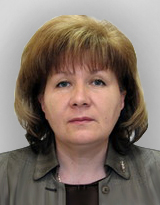
Marina P. Tselykh
Rostov State University of Economics (RSUE)
Russian Federation
Russian Federation
Doctor of Pedagogical Sciences, Professor
69, Bolshaya Sadovaya st., Rostov-on-Don, 344002
References
1. Black P., & Wiliam, D. (2009). Developing the theory of formative assessment. Educational Assessment, Evaluation and Accountability. 21(1): 5-31. DOI: https://doi.org/10.1007/s11092-008-9068-5.
2. Brown, G.T., & Harris, L.R. (2013). Student self-assessment. In J. H. McMillan (Ed.), Sage handbook of research on classroom assessment: 367-393. DOI: https://doi.org/10.4135/9781452218649.n21.
3. Bondarevskaya, E.V. (2000). Theory and practice of personal oriented education. Rostov-on-Don: Bulat. 351 p. (In Russian).
4. Chen, P.P., & Bonner, S.M. (2020). A framework for classroom assessment, learning, and self-regulation. Assessment in Education: Principles, Policy & Practice. 27(4): 373-393. DOI: https://doi.org/10.1080/0969594X.2019.1619515.
5. Gibbs, G. (1988). Learning by Doing: a guide to teaching and learning methods. Great Britain. Further Education Unit: 129 p.
6. Hopfenbeck, T.N., & Stobart, G. (2015). Large-scale implementation of assessment for learning. Assessment in Education: Principles, Policy & Practice. 22(1): 1-2. DOI: https://doi.org/10.1080/0969594X.2014.1001566.
7. Ivanov, A.V. (2003). Reflection as a psychological mechanism for the development of the self-concept of an adult in education. Avtoreferat kandidatskoi dussertatsii. Kaluga. 23 p. (In Russian).
8. Khutorskoy, A. V. Didactics. Sankt-Peterburg: Piter. 718 p. (In Russian).
9. Kolb, D. A. (1984). Experiential learning: experience as the source of learning and development. Englewood Cliffs, NJ: Prentice Hall: 256 p.
10. Kraevskiy, V.V. (1977). Issues of scientific substantiation of education (methodological analysis). Moskow: Pedagogika: 264 p. (In Russian).
11. Leontyev, A.N. (2004). Activity, consciousness, and personality. Ucheb. posobie dlya studentov vuzov po napravleniyu i spets. "Psikhologiya", "Klin. psikhologiya". Moskow: Smysl: Academia: 345 p. (In Russian).
12. Osmolovskaya, I.M. (2020). Didactics: from classics to modernity. Moskow; Sankt-Peterburg: Nestor-Istoriya: 247 p. (In Russian).
13. Panadero, E.A. (2017). Review of self-regulated learning: Six models and four directions for research. Frontiers in Psychology. 8(422). DOI: https://doi.org/10.3389/fpsyg.2017.00422.
14. Perminova, L.M. (2021). Modern didactics: from Comenius to the present day: philosophical and pedagogical aspects of modern didactics: monograph. Moskow: Shkol'nye tekhnologii: 294 p. (In Russian).
15. Slastenin, V. A., Kashirin, V.P. (2008). Psychology and Pedagogy. Uchebnoe posobie dlya studentov vysshih uchebnyh zavedenij nepedagogicheskogo profilya.. Moskow: 477 p. (In Russian).
16. Rubinshtein, S.L. (2003). Being and consciousness. Man and the world. Sankt-Peterburg: Pechatnyj Dvor: 508 p. (In Russian).
17. Sadler, D.R. (2010). Beyond feedback: Developing student capability in complex appraisal. Assessment & Evaluation in Higher Education. 35(5): 535-550. DOI: https://doi.org/10.1080/02602930903541015
18. Schunk, D H., & Greene, J.A. (Eds.). (2018). Handbook of self-regulation of learning and performance (2 ed.). Routledge: 530 p.
19. Shchedrovitskiy, G. P. (2005). Thinking, understanding, reflection. Moskow: Nasledie: 798 p. (In Russian).
20. Swaffield, S. (2011). Getting to the heart of authentic assessment for learning. Assessment in Education: Principles, Policy & Practice. 18(4): 433-449. DOI: https://doi.org/10.1080/0969594X.2011.5828
21. Vulfov, B.Z. (1994). The seven paradoxes of education. Moskow: Novaya shkola: 77 p. [In Russian]
22. Wiliam, D. (2017). Assessment and learning: Some reflections. Assessment in Education: Principles, Policy & Practice. 24(3): 394-403. DOI: https://doi.org/10.1080/0969594X.2017.1318108.
23. Zimmerman, B.J. (2013). From cognitive modeling to self-regulation: a social cognitive career path. Educ. Psychol. 48: 135-147. DOI: 10.1080/00461520.2013.794676
Review
For citations:
Tselykh M.P. The relationship between evaluation and self-assessment in the training of future pedagogues. Crede Experto: transport, society, education, language. 2022;(4):172-181. (In Russ.) https://doi.org/10.51955/2312-1327_2022_4_172
Views:
128
JATS XML




 Email this article