


Experience in organizing an eco-educational project within the framework of educational work with students in higher education

https://doi.org/10.51955/2312-1327_2023_4_198
Abstract
The article is devoted to the problem of eco-educational events organizing in higher education organizations of the Ministry of Internal Affairs of Russia. The material for the study was the results of the project activities implementation within the framework of a problem-oriented approach on the example of a specific eco-educational event – the ecological forum “Disposable Planet”. The study used general scientific inductive methods, the method of analysis and the search method. The relevance of the topic is due to a number of factors: the actualization of the educational component, the complex environmental situation of the modern world, the weak development of environmental competencies among young people. The paper presents a brief analysis of Russian and foreign scientific literature on the problem of project-based learning in general and the features of environmental education in the form of project activities, in particular. The author presents and analyzes the experience of organizing an eco–educational project – the ecological forum “One-time Life”, held in March 2022 based on the East Siberian Institute of the Ministry of Internal Affairs of Russia. The relevance and educational orientation of the event in the system of higher education and youth education, as well as in educational institutions of higher education of the Ministry of Internal Affairs of the Russian Federation is determined. The practical experience of the implementation of this project and its main results are presented. The main target audience were students of the Institute of 1-4 courses of full-time faculties. The forum allowed to reach 25 people, increase the knowledge, skills and abilities of the forum participants in three areas of environmental education, develop six projects to conduct environmental education events at the university, as well as attract other persons to cooperate with the institute as part of its greening.
About the Author
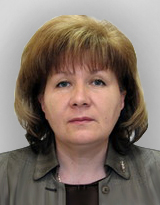
A. V. Danchevskaya
East Siberian Institute of the Ministry of Internal Affairs of Russia
Russian Federation
Russian Federation
Anastasia V. Danchevskaya, Candidate of Historical Sciences
110, Lermontov st. Irkutsk, 664074
References
1. Angelovskaya S. K. (2020). About the application of the project approach in the system of environmental education of students of a professional educational organization. Innovacionnoe razvitie professional'nogo obrazovaniya. 2 (26): 96-101. (In Russian)
2. Cho Yonjoo & Brown Catherine. (2013). Project-based learning in education: Integrating business needs and student learning. European Journal of Training and Development. 37. doi: 10.1108/EJTD01-2013-0006.
3. Cvetova E. A. (2022). Numerical simulation of the propagation of microplastics in the lake. Baikal. Marchukovskie nauchnye chteniya. 1: 91. (In Russian)
4. Du Xiangyun & Su Liya & Liu Jingling. (2013). Developing sustainability curricula using the PBL method in a Chinese context. Journal of Cleaner Production. 61: 80–88. doi: 10.1016/j.jclepro.2013.01.012.
5. Holieva Mariia. (2022). Project approach to learning: experience in different countries. Scientific Journal of Polonia University. 53: 26-34. doi: 10.23856/5303.
6. Ivanova S. V., Pastuhova L. S. (2018). The possibilities of using the project method in education and work with young people at the present stage. Obrazovanie i nauka. 6: 29-49. (In Russian)
7. Junisbayeva Symbat. (2020). Project-based learning as an approach to develop critical thinking skills: a literature review. Proceedings of International Young Scholars Workshop. 9: 21-39. doi: 10.47344/iysw.v9i0.103.
8. Kargina E. M. (2014). Metod pedagogicheskogo proektirovaniya: istoriya i sovremennost' [Method of pedagogical design: history and modernity]. Penza. 2014. 212 р. (In Russian)
9. Kostyukova M. S. (2022). Assessment of the current ecological state of soils on the western coast of Lake Baikal (using the example of soils of the coastal part of the lake, the delta and the Goloustnaya River basin). Izvestiya Irkutskogo gosudarstvennogo universiteta. Seriya: Nauki o Zemle. 41: 77-93. (In Russian)
10. Mahubrahmanova V. R. (2021). Project activity as a tool for the formation of ecological culture. Problemy sovremennogo pedagogicheskogo obrazovaniya. 71-2: 241-244. (In Russian)
11. Pecore John L. (2015). From Kilpatrick’s project method to project-based learning. In Eryaman (Ed.). International Handbook of Progressive Education. 155–171.
12. Petrova N. P., Halilov S. R. (2015). Realizaciya metoda proektov v podgotovke pedagoga (na primere gumanitarnyh disciplin) [Implementation of the project method in teacher training (using the example of humanities)]. Stavropol'. 2015. 196 р. (In Russian)
13. Proektnaya i issledovatel'skaya deyatel'nost' v obrazovatel'nom processe sovremennoj shkoly [Project and research activities in the educational process of a modern school]. Novosibirsk, 2017. 164 р. (In Russian)
14. Teben'kova E. A. (2019). Project approach to environmental education in a professional educational organization. Nepreryvnoe obrazovanie: XXI vek. 2 (26): 40-51. (In Russian)
Review
For citations:
Danchevskaya A.V. Experience in organizing an eco-educational project within the framework of educational work with students in higher education. Crede Experto: transport, society, education, language. 2023;(4):198-210. (In Russ.) https://doi.org/10.51955/2312-1327_2023_4_198
Views:
229
JATS XML





 Email this article